Insights Business Setup
How Many Free Zones in UAE? The Full List of All 40+ Zones Mapped by Emirate
More than 40 free zones in the UAE, listed emirate by emirate — Dubai, Abu Dhabi, Sharjah, Ajman, RAK, UAQ and Fujairah — plus how to pick the right one.
Key takeaways
- 40+ free zones operate across the UAE in 2026 — each with its own regulator, licence types and published tariff.
- Dubai hosts the most — DMCC, JAFZA, DAFZA, Dubai South, IFZA, Meydan, DIFC and the TECOM cluster among 20+.
- Abu Dhabi consolidates — KEZAD Group absorbed ICAD and the industrial zones; ADGM, Masdar and twofour54 cover finance, cleantech and media.
- Northern emirates compete on price — Ajman, UAQ, RAK and Fujairah zones publish some of the lowest package rates in the country.
- Two financial free zones — DIFC and ADGM — run their own courts and common-law frameworks, unlike commercial free zones.
- Corporate tax applies everywhere — the 0% free zone rate is conditional QFZP treatment, not an automatic exemption in any zone.
How many free zones in the UAE are there? More than 40 free zones operate across the seven emirates in 2026 — over 20 in Dubai alone, nine in Abu Dhabi, six in Sharjah, and at least one major zone in every northern emirate. The count moves as authorities merge, rebrand or launch new clusters, so treat any headline number as indicative.
The UAE runs more than 40 free zones across its seven emirates — the largest concentration of free zone jurisdictions anywhere in the world. Each has its own licensing authority, its own activity list, its own published tariff and its own personality: JAFZA is a port, DIFC is a courtroom, Masdar is a cleantech campus, and Ajman Free Zone is a price list. This page, updated July 2026, is the full list of free zones in the UAE organised by emirate, with a one-line verdict on what each zone is actually built for and links to our detailed guides where founders most often need the depth. If you want the shortlist argued out against your own activity, customers and budget, our business setup advisory in Dubai team does exactly that before any licence application.
How many free zones in the UAE are there, emirate by emirate?
The honest answer to “how many free zones in UAE” is that there is an official figure, and it is approximate by the government’s own choice: the UAE government portal states that “there are about 40 free zones in the UAE” (u.ae, page updated 17 April 2026). No register publishes a live count that reconciles to a single number — each emirate licenses its own zones, and authorities merge and rebrand between one year and the next, which is why u.ae hedges with “about”. The table below is the count of zones named on this page, and it lands in the same place.
| Emirate | Free zones on this list | Notes |
|---|---|---|
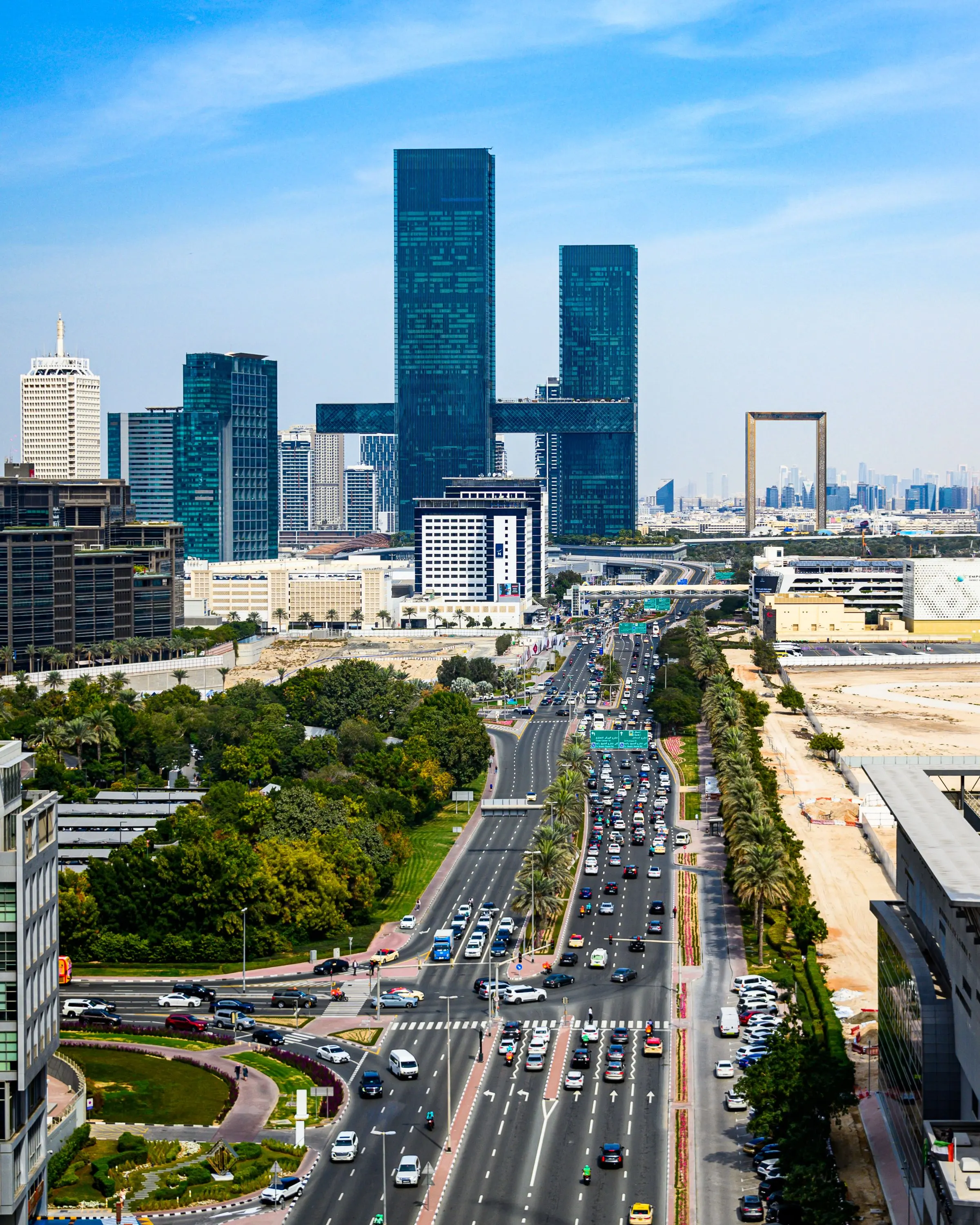
| Dubai | 20+ | DMCC, JAFZA, DAFZA, Dubai South, IFZA, Meydan, DIFC, DUCAMZ, Dubai Silicon Oasis, Dubai CommerCity, DWTC, Dubai Healthcare City, Dubai Maritime City, Gold and Diamond Park, Dubai Outsource City plus the TECOM cluster |
| Abu Dhabi | 9 | Chief among them KEZAD (which absorbed ZonesCorp and ICAD I–V in 2022), ADGM, Masdar City, twofour54 / Yas Creative Hub and ADAFZ |
| Sharjah | 6 | SAIF Zone, Hamriyah, SHAMS, Sharjah Publishing City, SRTIP, Sharjah Healthcare City |
| Ajman | 2 | Ajman Free Zone, Ajman Media City |
| Ras Al Khaimah | 2 | RAKEZ and RAK DAO (RAK ICC is an offshore registry, not a free zone) |
| Fujairah | 2 | Fujairah Free Zone, Creative City Fujairah |
| Umm Al Quwain | 1 | UAQ Free Trade Zone |
That totals more than 40 before counting the sub-zones and communities each authority runs inside its own perimeter — KEZAD alone spans several industrial communities, and the TECOM group licenses eight of the Dubai clusters named on this page under one roof. Two caveats worth carrying into any plan. Offshore registries — JAFZA Offshore, RAK ICC, Ajman Offshore — are company registrars, not free zones, and issue non-resident holding entities with no visas or premises. And the free zones in the UAE that count as Designated Zones for VAT are a narrower group again: only those listed under Cabinet Decision No. 59 of 2017, which the FTA maintains and updates.
What a UAE free zone actually is
A free zone is a defined economic area with its own company registrar and licensing authority, created to attract foreign investment with a standard bundle: 100% foreign ownership, full repatriation of capital and profits, customs duty suspension on goods held inside the zone, and streamlined visas tied to the zone’s facilities. The model started with Jebel Ali Free Zone in 1985 and multiplied until nearly every emirate had a portfolio of zones aimed at different industries. For a fuller primer on how the model works, see our what is a free zone in the UAE explainer.
You will see the same places called free trade zones, and in the UAE the two names describe the same thing — a licensed enclave with its own registrar sitting outside the mainland licensing system. What the names do not tell you is the VAT position. The designated free zones in the UAE are a narrower group: only the zones listed under Cabinet Decision No. 59 of 2017, which the FTA maintains and updates, are Designated Zones where qualifying goods movements between businesses can fall outside UAE VAT. Plenty of well-known zones are free zones for licensing purposes but not Designated Zones for VAT, so check the current list before you build a customs or VAT plan around an address.
Two things the brochures blur. First, a free zone licence restricts direct mainland trading — goods sold onshore clear customs and typically flow through a distributor or branch. Second, the famous “0% tax” is now conditional: since Federal Decree-Law 47 of 2022, free zone companies pay 9% corporate tax above AED 375,000 unless they genuinely hold Qualifying Free Zone Person status, with real substance and audited accounts. Both points shape which zone — or whether a mainland licence — fits, and our Dubai free zone company formation guide unpacks the decision in full.
40+
Active free zones across the seven emirates in 2026
Dubai free zones list
Dubai operates over 20 free zones — the deepest bench in the country. The list of free zones in Dubai that founders actually shortlist:
| Zone | Built for | Our guide |
|---|---|---|
| DMCC (Dubai Multi Commodities Centre) | Commodities, trading HQs, crypto — the prestige generalist | DMCC guide |
| JAFZA (Jebel Ali Free Zone) | Port-side logistics, industrial, regional distribution | JAFZA guide |
| DAFZA (Dubai Airport Free Zone) | Air-cargo trading, aviation, electronics | DAFZA guide |
| Dubai South (incl. Dubai Logistics City, EZDubai) | Logistics, e-commerce fulfilment, aviation at DWC | Dubai South guide |
| IFZA (International Free Zone Authority) | Budget-tier services and consulting licences | IFZA guide |
| Meydan Free Zone | Digital-first solo founders and SMEs | Meydan guide |
| DIFC (Dubai International Financial Centre) | Banks, funds, fintech — common-law financial zone | DIFC formation guide |
| DUCAMZ | Used-car re-export trade | DUCAMZ guide |
The TECOM Group cluster licenses most of Dubai’s knowledge economy: Dubai Internet City (tech), Dubai Media City (media and agencies), Dubai Studio City, Dubai Production City, Dubai Knowledge Park and Dubai International Academic City (education), Dubai Science Park and Dubai Design District (d3).
Beyond TECOM sit Dubai Silicon Oasis — the emirate’s original smart zone for tech and electronics, now under the Dubai Integrated Economic Zones Authority alongside DAFZA and Dubai CommerCity (e-commerce) — plus Dubai World Trade Centre free zone (events and crypto under VARA’s shadow), Dubai Healthcare City, Dubai Maritime City, the DMCA-run maritime cluster, Gold and Diamond Park, and Dubai Outsource City. What each actually charges is a moving target — our free zone licence cost in Dubai breakdown tracks the published rates zone by zone.

Abu Dhabi free zones list
Abu Dhabi consolidated aggressively in 2022, folding ZonesCorp’s industrial estates — including the Industrial City of Abu Dhabi (ICAD) — into KEZAD Group, which now runs the largest integrated economic zone platform in the region around Khalifa Port. The working list:
- KEZAD — industrial, manufacturing and logistics at scale; our KEZAD guide covers packages and port logic.
- ICAD I–V — the legacy industrial areas in Mussafah, now KEZAD communities for heavy manufacturing.
- ADGM (Abu Dhabi Global Market) — the common-law financial free zone on Al Maryah Island; see the ADGM formation guide.
- Masdar City Free Zone — cleantech, energy, mobility and AI companies in the low-carbon campus.
- twofour54 / Yas Creative Hub — media, gaming and production.
- Abu Dhabi Airport Free Zone (ADAFZ) — air-cargo and aviation-linked business.
How the nine zones compare — and when the AD DED mainland route beats all of them — is the subject of our dedicated Abu Dhabi free zones comparison and the wider business setup Abu Dhabi guide.
Sharjah free zones list
Sharjah runs six zones with two clear champions on volume. SAIF Zone (Sharjah Airport International Free Zone) handles trading and light industrial by the airport; Hamriyah Free Zone is the port-side industrial heavyweight — it publishes no tariff (hfza.ae, checked Aug 2026) and quotes on enquiry, as covered in our Hamriyah setup guide. SHAMS (Sharjah Media City) sells the emirate’s cheapest service licences and does publish, from AED 5,750 for its media package and AED 6,875 for its standard package (startwith.shams.ae, checked Aug 2026). Sharjah Publishing City claims the publishing niche and publishes from AED 5,750 with zero visas, rising to AED 6,875 with one (spcfz.ae, checked Aug 2026).
That the two zones publish identical figures is a genuine coincidence, and it catches people out constantly — always name the zone alongside the number. Rounding out the six, SRTIP (Sharjah Research, Technology and Innovation Park) anchors R&D, and Sharjah Healthcare City licenses medical operators.
The full comparison — including when Sharjah mainland under SEDD wins — is in our Sharjah free zones list and business setup Sharjah guide.
Northern emirates: Ajman, UAQ, RAK and Fujairah
The northern emirates compete on one axis: price — and they are genuinely the cheapest licences in the country.
| Emirate | Zones | Positioning |
|---|---|---|
| Ajman | Ajman Free Zone, Ajman Media City | No published tariff (afz.gov.ae, Aug 2026); budget trading and services — Ajman Free Zone guide, plus the Ajman mainland and offshore routes |
| Umm Al Quwain | UAQ Free Trade Zone | All-inclusive from AED 2,266 per month per its published rate (uaqftz.gov.ae, Aug 2026); no annual total is published — UAQ setup guide |
| Ras Al Khaimah | RAKEZ, RAK ICC (offshore), RAK DAO (digital assets) | RAKEZ from AED 6,000 per published tariff (rakez.com, Aug 2026), with real industrial depth — RAKEZ guide and RAK trade licence costs |
| Fujairah | Fujairah Free Zone, Creative City Fujairah | East-coast port access and low-cost media/service licences — Fujairah free zone guide |
A note on names you may meet in the wild: IFZA began life in Fujairah before relocating its operations to Dubai, RAK’s former twin authorities (RAK FTZ and RAKIA) merged into RAKEZ in 2017, and offshore registries — JAFZA Offshore, RAK ICC, Ajman Offshore — are company registrars rather than free zones proper; they issue non-resident holding entities with no visas or premises, a structure we compare in the offshore company formation guide.
Free zone, offshore or mainland — three routes that get confused
Before the list is useful you have to know which of three things you are actually shopping for, because founders routinely compare a free zone package against an offshore registration and a mainland licence as though they were variants of one product. They are not. They give you different rights, different costs and different problems.
| Mainland | Free zone | Offshore registry | |
|---|---|---|---|
| Issued by | The emirate’s economic department (DET in Dubai, ADDED in Abu Dhabi, SEDD in Sharjah) | The free zone’s own authority | An offshore registrar — JAFZA Offshore, RAK ICC, Ajman Offshore |
| What you get | A trade licence | A trade licence | A certificate of incorporation, not a trade licence |
| Trading inside the UAE | Unrestricted, subject to the activity list | Restricted; onshore sales normally route through a distributor, a branch or a dual licence | Not permitted |
| Residence visas | Yes, quota driven by premises | Yes, quota driven by the facility leased | None |
| Physical premises | Required | Required, from a flexi-desk upwards | None; a registered agent’s address only |
| Typical use | Serving UAE customers directly | Export, regional trade, services, holding | Holding shares or assets, structuring |
The offshore column is the one that catches people, because an offshore registration is cheap, fast and sounds like the other two. It cannot sponsor you for a visa, cannot rent you an office and cannot invoice a UAE customer. It is a holding vehicle. If somebody quotes you a strikingly low “company formation” price and the package carries no visa, check which column you are being sold — our offshore company formation guide sets out what these vehicles legitimately do.
The mainland column has also changed more than most published comparisons admit. Full foreign ownership was extended to most mainland activities in 2021, which removed what used to be the single biggest reason to pick a free zone. What survives as a genuine free zone advantage is narrower: customs treatment on goods held inside the zone, a licensing authority that is faster to deal with than a government department, and package pricing that bundles licence, workspace and visa quota into one transaction. Those are real advantages. “100% ownership” mostly is not one any more, whatever the brochure says.
What a free zone licence does not get you
Every zone markets what its licence enables. Fewer are equally clear about the boundaries, and the boundaries are where the expensive surprises live.
It does not let you sell freely into the UAE mainland. A free zone company supplying a mainland customer is, in the ordinary case, exporting into the mainland — goods clear customs at the boundary and the arrangement usually needs a distributor, a mainland branch, or a dual-licence scheme where the zone offers one. Service businesses have more practical room than goods traders, but “more room” is not the same as unrestricted, and a business plan that assumes otherwise usually discovers it at the first mainland tender.
It does not exempt you from corporate tax. This is the single most persistently mis-sold point in UAE company formation. Federal Decree-Law 47 of 2022 applies to free zone companies exactly as it applies to everyone else. The 0% rate people associate with free zones is Qualifying Free Zone Person treatment, and it is conditional — qualifying activities, real substance in the zone, audited financial statements, and de minimis limits on non-qualifying income. Fail any condition and the whole entity is taxed at the standard rate for the period. No zone on this page grants an exemption, because no zone has the power to.
It does not exempt you from VAT. Free zone status and Designated Zone status are two different things. A Designated Zone is a fenced, customs-controlled area listed under Cabinet Decision No. 59 of 2017 — the FTA maintains that list and it is narrower than the list of free zones on this page. Inside a Designated Zone, certain business-to-business movements of goods can fall outside the scope of UAE VAT. Outside that list, a free zone address changes nothing about your VAT position. And even inside one, services are treated differently from goods. Check the current FTA list against the specific zone before you build a customs or VAT plan on an address.
It does not guarantee you a bank account. Banks run their own risk models and some zones are demonstrably harder to bank than others, which has nothing to do with the zone’s legal standing and everything to do with how many shell companies a bank’s compliance team has previously seen from that address. Budget time for this. A licence you cannot bank is a licence you cannot trade on.
And it does not come with the visa quota you assume. Quotas attach to the facility, not the licence — a flexi-desk supports a small number of visas, a dedicated office more, a warehouse more again. Price the tier that carries the headcount you actually plan to hire in year two, not the entry tier that carries the licence.
The company forms available inside a free zone
Once you have picked a zone you still have to pick a legal form, and the terminology varies enough between authorities to cause real confusion.
Most commercial zones offer a single-shareholder vehicle and a multi-shareholder one, commonly labelled FZE (Free Zone Establishment) and FZCO or FZ-LLC (Free Zone Company). The naming is not standardised across the country — some zones use only one term, some use different ones entirely, and the minimum shareholder count and any minimum share capital are set by each zone’s own regulations. Do not assume the terms you learned in one zone carry over to another; read the authority’s own company regulations.
Alongside those, most zones register branches. A branch of an existing UAE company or of a foreign parent is not a separate legal person — it carries the parent’s liability and files against the parent’s documents, which usually need attestation. The trade-off is straightforward: a branch avoids creating a new entity and inherits the parent’s track record, which can help with banking, but it also exposes the parent directly.
The financial free zones sit outside this vocabulary altogether. DIFC and ADGM run their own common-law company regimes with their own registrars, their own courts and their own regulators, so an entity there is formed under DIFC or ADGM companies legislation rather than under a commercial zone’s regulations. Costs and ongoing compliance obligations sit well above the commercial zones, and they are the right answer for funds, holding structures and regulated financial activity rather than for a trading company that liked the address.
Reading a free zone price list without getting caught
Most zones on this page do not publish a tariff at all, which is itself worth knowing before you spend an evening comparing figures that are somebody’s estimate. Where a zone does publish, the number is almost always a first-year package, and four things sit outside it more often than not.
Renewal is the first. A package price buys year one; the licence renews annually and the renewal figure is frequently different from the introductory one. Ask for it in writing before you commit, and model three years rather than one.
Visas are the second. An entry package quotes a visa quota, not issued visas. Each actual visa carries its own cost — entry permit, status change, medical, Emirates ID, stamping — charged per person and usually per renewal cycle. A package that carries four visa slots and a package that includes four issued visas are wildly different products at the same headline price.
The establishment card is the third. Most zones require one before any visa can be processed against the licence, and it renews on its own clock.
Audit is the fourth, and the one that varies most. Some zones require audited financial statements from an approved auditor as a condition of licence renewal; others do not, or only require them above a threshold or for particular entity forms. Where audit is mandatory it is a recurring annual cost in the same bracket as the licence itself, and it is not usually in the package price. Separately, any entity claiming Qualifying Free Zone Person treatment needs audited statements regardless of what the zone requires, so for a business chasing the 0% rate this is a cost you carry whichever zone you pick.
Add those four to the headline and the ranking of the “cheapest” zones frequently changes. That is not a criticism of the zones — a package price is a real price for what it covers. It is a warning about comparing packages that cover different things.
How to actually choose from 40+ zones
Nobody needs to compare forty zones. Activity, customers and visa count eliminate thirty-five of them in ten minutes — the real decision is always between the last three.
The filter that works, in order:
- Activity first. Zones publish activity lists; regulated, industrial and food activities immediately narrow the field. A general trading company shops a different shortlist than a consultancy — see the general trading licence routes.
- Customer geography. Mostly mainland UAE customers? Weigh a mainland licence or dual-licence zone before any pure free zone. Export and international clients? The free zone restriction barely bites.
- Visa arithmetic. Entry packages carry 0–6 visas; quotas scale with facility size. Price the package that carries your real headcount, not the teaser tier. Compare zones on the slots you will actually use and what each one costs to issue, not on the headline licence fee — our guide to free zone visa cost and quota shows how the two stack together.
- Substance and tax. Chasing QFZP 0% treatment demands premises, people and audited accounts in the zone — test your model against the QFZP checklist before letting tax drive the choice.
- Three-year cost. Renewals, visa renewals and facility upgrades decide the true number. Our business setup cost calculator models the all-in figure across zones side by side.
How Velmont Crest helps
Velmont Crest is an accounting and advisory firm first, and we are open about the commercial position: we are an official channel partner of Meydan Free Zone and RAKEZ and a referral partner across the other major zones, so some of the zones on this list pay us and most do not. Our shortlists look different from a setup agent’s because the accounting relationship afterwards is the part we actually care about, and it is worth more to us than a one-off commission on the wrong licence.
We compare the zones on this list against your activity wording, customer geography, visa plan and tax position, model the three-year cost honestly, and then run the finance layer after incorporation: bookkeeping, VAT registration, corporate tax registration and the audit file a QFZP claim requires. The forty-zone list above is the map; get a free quote when you need someone to argue the route.
Frequently asked questions
- How many free zones are there in the UAE?
- The UAE government portal puts it at "about 40 free zones in the UAE" (u.ae, page updated 17 April 2026), and the word "about" is the government's own hedge rather than ours. They spread across the seven emirates, with Dubai hosting the most and every northern emirate holding at least one major zone. The count moves as authorities merge (Abu Dhabi folded its industrial zones into KEZAD Group in 2022) and new clusters launch, so confirm a zone's status with its own authority. Counting is also a definitional question: offshore registries such as RAK ICC and JAFZA Offshore are company registrars rather than free zones, and the FTA's Designated Zone list for VAT is a narrower set again.
- What is the difference between a free zone and mainland company in the UAE?
- A mainland licence, issued by an emirate's Department of Economic Development, lets you trade anywhere in the UAE without restriction. A free zone licence is issued by the zone's own authority, gives 100% foreign ownership and simplified setup, but limits direct onshore trading — selling into the mainland typically flows through a distributor, a branch or specific dual-licence arrangements. Since mainland ownership rules were liberalised in 2021, the choice turns mostly on activity, customers and cost.
- Which is the cheapest free zone in the UAE?
- The northern emirates carry the lowest rates. The zones that actually publish, all checked Aug 2026: RAKEZ from AED 6,000 (rakez.com), UAQ FTZ from AED 2,266 a month (uaqftz.gov.ae — an instalment; no annual total is published), Sharjah Publishing City from AED 5,750 (spcfz.ae) and SHAMS from AED 5,750 for media and AED 6,875 for standard (startwith.shams.ae). SPC and SHAMS publish the same AED 5,750 figure, so always name the zone with the number. Ajman Free Zone and Hamriyah quote on enquiry. Dubai costs roughly double, with Meydan from AED 12,500 and IFZA on enquiry.
- Do all UAE free zones offer 100% foreign ownership?
- Yes. Full foreign ownership without a local partner has been the defining feature of the free zone model since JAFZA opened in 1985. Free zone companies also enjoy full repatriation of capital and profits and customs duty suspension on goods that stay within the zone. Since 2021 most mainland activities also allow 100% foreign ownership, which removed a key free zone advantage and shifted the comparison to cost, activity scope and regulation.
- Do free zone companies pay UAE corporate tax?
- The 9% corporate tax regime applies to free zone companies like everyone else. The much-quoted 0% rate is conditional Qualifying Free Zone Person treatment under Federal Decree-Law 47 of 2022 — it requires qualifying activities, real substance in the zone, audited financial statements and de minimis limits on non-qualifying income. No zone on this list confers automatic exemption, whatever the marketing says.
- What are the financial free zones DIFC and ADGM?
- Dubai International Financial Centre and Abu Dhabi Global Market are the UAE's two financial free zones — a separate constitutional category with their own common-law legal systems, independent courts and financial regulators (DFSA and FSRA). They host banks, funds, fintechs and holding structures rather than trading warehouses, and their setup costs and compliance obligations sit well above commercial free zones.
- Can a free zone company do business in mainland Dubai?
- Not directly, as a rule. A free zone entity invoices mainland customers through a locally licensed distributor, opens a mainland branch, or uses a dual-licence scheme where its zone offers one — some authorities, like RAKEZ, even issue non-freezone licences alongside. Service businesses have more practical flexibility than goods traders, for whom customs duty applies the moment products leave the zone for the mainland.
- How many free zones are there in Dubai?
- Dubai operates over twenty free zones, more than any other emirate, and the exact count moves as authorities merge, rebrand or launch clusters. The names most founders actually shortlist are DMCC, JAFZA, DAFZA, Dubai South, IFZA, Meydan and DIFC, with the TECOM group — Dubai Internet City, Dubai Media City, Dubai Studio City and their siblings — licensing much of the knowledge economy alongside them. Treat any headline number as indicative rather than fixed, and confirm a zone's current status directly with the authority before you build a plan around it, since a zone's licensing rules and fees can change between renewals.
- What is a free zone in the UAE?
- A free zone is a defined economic area inside the UAE with its own company registrar and licensing authority, separate from the mainland Department of Economy in each emirate. Companies licensed there get a standard package: full foreign ownership, repatriation of capital and profits, customs duty suspension on goods held inside the zone, and visa quotas tied to the facility they lease. The trade-offs are equally standard. Direct mainland trading is restricted, goods entering the mainland clear customs, and the 0% corporate tax people associate with free zones is conditional on meeting the Qualifying Free Zone Person tests rather than automatic.
Filed under: Free Zone, UAE Free Zones, Business Setup, Dubai, Abu Dhabi, Sharjah, Northern Emirates
Published · Updated