Insights Business Setup
Dubai South Free Zone Guide 2026: Setup, Costs and Dubai Logistics City
Dubai South free zone setup guide 2026 — Dubai Logistics City, EZDubai, Aviation District and Business Park explained, licence types, costs, visas and tax.
Key takeaways
- Dubai Logistics City is the Logistics District of Dubai South — the multimodal cargo platform beside Al Maktoum International, linked to Jebel Ali Port by a bonded corridor.
- Four working districts — Logistics, Aviation, Business Park and EZDubai — each licenses different activities, from freight and MRO to consulting and e-commerce fulfilment.
- Al Maktoum expansion approved in April 2024 — a government-announced AED 128 billion programme to make DWC the world's largest airport, anchoring long-term demand.
- Licence types — trading, service, industrial and e-commerce, issued as a DWC-LLC or branch, all with 100% foreign ownership.
- Costs are package-based — entry office packages compete with mid-tier Dubai zones; warehousing and plots are priced per project, so model three years, not year one.
- Tax position is standard UAE — 9% corporate tax above AED 375,000 unless QFZP conditions are genuinely met; VAT designated-zone status depends on the specific area.
Dubai South is the 145 sq km free zone city around Al Maktoum International Airport, made up of the Logistics District (still widely called Dubai Logistics City), the Aviation District, the Business Park Free Zone and EZDubai. It offers 100% foreign ownership, trading, service, industrial and e-commerce licences, and a bonded customs corridor to Jebel Ali Port.
Dubai South is the free zone city built around Al Maktoum International Airport (DWC) — 145 square kilometres of master-planned districts that began life in 2006 as Dubai World Central and took its current name in 2015. Its commercial engine rooms are the Logistics District, still widely known by its original name Dubai Logistics City, the Aviation District, the Business Park Free Zone and EZDubai, the dedicated e-commerce zone.
A Dubai South company setup gets 100% foreign ownership, a licence matched to one of those districts, and access to the piece of infrastructure that genuinely sets the zone apart: a bonded customs corridor to Jebel Ali Port that collapses sea-air cargo transfer into a matter of hours. This guide, updated July 2026, covers what sits where, what a Dubai South free zone licence involves, what the costs are built from, and how the tax position really works — with the comparison points against JAFZA and the wider Dubai free zone landscape where they matter.
From Dubai World Central to Dubai South
The project was announced in 2006 as Dubai World Central: a purpose-built aerotropolis around a new mega-airport, planned as the long-term successor to the space-constrained Dubai International. The 2015 rebrand to Dubai South repositioned it as a city rather than a cargo project — residential districts, the Expo 2020 site on its flank, and a business ecosystem alongside the runways.
The strategic bet became concrete in April 2024, when the Dubai government announced approval of a AED 128 billion expansion of Al Maktoum International — a programme publicly targeted at making DWC the largest airport in the world and, over time, the emirate’s primary aviation hub. For anyone weighing a 10-year operational decision, that announcement is the single most important fact about the zone: the infrastructure gravity is moving toward Dubai South, with airlines, MRO operators and logistics players sequencing their own moves around it.
AED 128bn
Al Maktoum International expansion approved by Sheikh Mohammed bin Rashid Al Maktoum on 28 April 2024, per the Dubai Media Office
The expansion, in the government’s own figures
| Element | Approved figure | Source |
|---|---|---|
| Cost of the new passenger terminals | AED 128 billion | Dubai Media Office, 28 April 2024 |
| Passenger capacity at full operation | 260 million a year | Dubai Media Office, as above |
| Cargo capacity at full operation | 12 million tonnes a year | Dubai Media Office, as above |
| Runways | Five parallel runways | Dubai Media Office, as above |
| Aircraft contact stands | 400 | Dubai Media Office, as above |
| Stated intent for the surrounding area | An entire city around the airport in Dubai South, with housing demand for a million people | Dubai Media Office, as above |
| Construction start | Ordered to begin immediately on approval | Dubai Media Office, as above |
Every figure quoted from the Dubai Media Office record of the approval on 28 April 2024. Last verified 4 August 2026. Delivery schedules for individual phases are published by Dubai Airports and Dubai South separately and should be checked against your own occupancy timeline.
The cargo line is the one that matters commercially. Twelve million tonnes a year is a scale that reshapes air freight pricing in the region, and it is the reason freight forwarders and 3PLs are taking positions in the Logistics District well ahead of the terminals opening.
The districts: what actually sits where
Logistics District (Dubai Logistics City). The original core, and the reason most operating businesses look at the zone. It clusters bonded warehousing, freight forwarders, 3PLs and distribution centres directly against the airport’s cargo terminals. The searches for “dubai logistics city” that still outnumber searches for the zone’s official name are pointed here.
Aviation District. Hangars, MRO, business aviation, aircraft trading and training operations with airside access at DWC. Activities with an aircraft in the middle of them get licensed here.
Business Park Free Zone. The office district near the passenger terminal — consulting, tech, trading head offices and regional HQs that want the Dubai South licence without a warehouse attached.
EZDubai. The e-commerce zone carved out of the Logistics District, purpose-built for fulfilment centres and last-mile operators, with anchor facilities from major regional and global players. For an online retailer whose margins live and die on delivery times, it is the most literal answer the UAE offers.
Expo City Dubai — the converted Expo 2020 site — borders Dubai South but runs under its own separate authority. Do not conflate the licences.
| District | Built for | Typical licence | Facility you will need | The reason to be here |
|---|---|---|---|---|
| Logistics District (Dubai Logistics City) | Freight, 3PL, distribution, bonded storage | Trading, industrial, service | Warehouse or land plot | Airside adjacency plus the Jebel Ali corridor |
| Aviation District | MRO, business aviation, aircraft trading, training | Service, industrial | Hangar or airside facility | Airside access at DWC |
| Business Park Free Zone | Consulting, tech, trading head offices, regional HQ | Service, trading | Office or co-working | A Dubai South licence without a warehouse |
| EZDubai | E-commerce fulfilment and last-mile | E-commerce, trading | Fulfilment warehouse | Purpose-built for online retail flows |
| Residential and commercial districts | Housing and amenity for the above | Not a business licence | Not applicable | Staff accommodation near the operation |
District structure as published by Dubai South. Licence categories and facility requirements should be confirmed with the authority for your specific activity. Last reviewed 4 August 2026.
The district you sit in is not a cosmetic choice. It decides which activities the authority will licence, what facility you must lease, and — through the Designated Zone question further down — how goods moving through your unit are treated for VAT.
The Jebel Ali corridor: the zone’s real moat
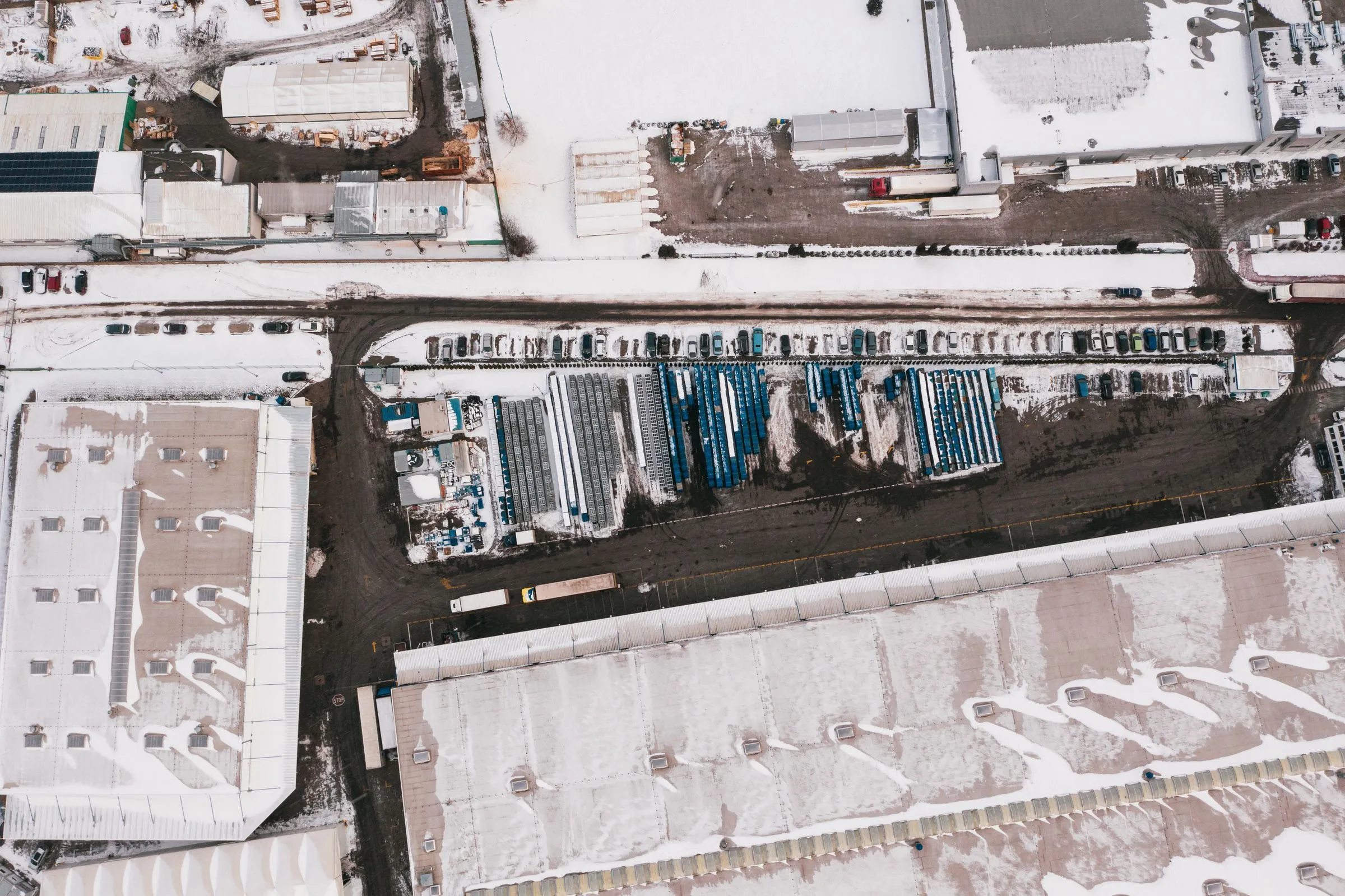
Dubai South’s defining piece of plumbing is the bonded logistics corridor linking Jebel Ali Port with Al Maktoum’s cargo side. Goods move between ship and aircraft inside a single customs envelope — no import declaration at one end and re-export at the other — which cuts sea-air transfer times from the better part of a day to a few hours and removes a layer of duty and paperwork friction entirely.
For transhipment traders, regional distribution hubs and anyone running sea-air product flows, this corridor is the argument. It pairs the world’s biggest port in the region with the airport being scaled to match, and a Dubai South warehouse sits in the middle of that sentence. The customs mechanics of operating this way — declarations, bonded movements, duty suspension — are the same e-Mirsal 2 machinery we unpack in our Dubai customs registration guide.
Dubai South company setup: licences, entities and process
Dubai South issues trading, service, industrial and e-commerce licences, held by either a free zone limited liability company (DWC-LLC) or a branch of an existing UAE or foreign company. Foreign ownership is 100% across the board, with no local partner or agent.
The setup sequence runs the standard free zone shape: activity and licence selection, name reservation and initial approval, shareholder documents (passport copies, and corporate documents — attested where the shareholder is a foreign company), lease of a facility matched to the licence, then licence issuance, establishment card and visa processing. Straightforward office-based setups complete in days; warehouse leases, industrial fit-outs and aviation activities needing regulator sign-off run longer. Visa quota follows the facility, as everywhere in the UAE — a flexi-desk carries a small allocation, warehouses scale on area.
| Step | Who controls it | What it produces | Where it stalls |
|---|---|---|---|
| 1. Fix activity and licence type | You | The shortlist of districts that can licence you | Deciding the business model during the application |
| 2. Trade name reservation and initial approval | Dubai South | Approval to proceed | Near-identical names; disallowed words |
| 3. Shareholder and manager documents | You and your home-country notary | An accepted application | Attestation and legalisation for corporate shareholders |
| 4. Facility selection and lease | You and Dubai South | The visa quota you can hold | Warehouse availability and fit-out lead time |
| 5. Aviation or sector approval | The relevant regulator | Permission to conduct the activity | Entirely outside the zone’s control |
| 6. Licence issuance | Dubai South | The trade licence | Any of steps 2 to 5 being incomplete |
| 7. Establishment card | Dubai South and immigration | The right to sponsor anyone | Cannot start before step 6 |
| 8. Customs client code | Dubai Customs | The ability to clear goods | Trade licence activity must support import and export |
| 9. Bank account | The bank | An operating account | Activity-to-narrative mismatch at interview |
| 10. Residence visas | Immigration and the health authority | Residency for shareholders and staff | Medical and Emirates ID appointment slots |
| 11. Corporate tax registration | You, on the FTA’s clock | A corporate tax TRN | Leaving it until the first return is due |
Sequence reflects Dubai South’s published licensing process together with the federal customs, immigration and tax steps that follow it. Last reviewed 4 August 2026.
Step 8 is specific to this zone’s tenant profile and is regularly left until goods are already in transit. A customs client code is registered against the trade licence, and the activity list on that licence has to support import and export before Dubai Customs will issue one. A logistics company that licensed only “logistics services” and forgot the trading activity discovers this at the worst possible moment. The licence-category question is worked through in our Dubai freezone license guide.

What Dubai South free zone licence cost is built from
Dubai South sells packages — licence, facility and visa eligibility bundled — and publishes current pricing through its own channels rather than a fixed public tariff, so any specific number you read on a third-party site deserves a verification call. What you can rely on is the structure of the cost stack:
- Licence and registration — the annual core, varying by licence type and activity count.
- Facility — the biggest swing factor. Co-working and small offices in the Business Park sit at one end; Logistics District warehouses and land plots are priced per project on size, height and specification.
- Immigration file and visas — establishment card, then per-visa costs for entry permit, medical, Emirates ID and stamping.
- Deposits and third-party approvals — utility and customs deposits for warehouse operators, plus regulator fees for aviation activities.
Entry office packages compete with mid-tier Dubai zones, and the zone runs promotional pricing cycles like all of its peers. The honest comparison is never year one — it is three years of licence renewals, facility rent and visa renewals, modelled against the same stack at JAFZA, DAFZA or a northern-emirates alternative like RAKEZ. Our UAE business setup cost calculator is built for exactly that three-year, all-in modelling, and for tailored numbers our business setup advisory team prices the shortlist zones side by side before you commit.
| Line to price in writing | Office-based business | Warehouse-based business |
|---|---|---|
| Licence and registration, for your exact activity count | Applies | Applies |
| Facility rent and service charges | Co-working or office | Warehouse rent, height and specification drive it |
| Fit-out and racking | Rarely | Frequently the largest one-off line |
| Establishment card, issue and renewal | Applies | Applies |
| Per-visa immigration costs | Small headcount | Scales with warehouse staffing |
| Refundable deposits | Visa deposits | Visa, utility and customs deposits |
| Customs client code and broker fees | Only if importing | Always |
| Insurance | Basic | Goods in transit, stock and public liability |
| Aviation or sector regulator fees | Rarely | Only for aviation activities |
| Audit, where a QFZP claim is made | Applies | Applies |
| Year-two and year-three renewal figures | Applies | Applies, and rent escalation matters most here |
Cost-line taxonomy for a Dubai South setup. We do not publish amounts: Dubai South prices by package and project and revises them on promotional cycles, so the only reliable figure is the one the authority quotes you in writing for your own specification. Last reviewed 4 August 2026.
Send that list to Dubai South and to two comparator zones as a single brief and compare the completed columns. It is the same method our Dubai mainland company formation cost guide applies to a Department of Economy and Tourism licence, and running both in parallel is the fastest way to find out whether a free zone address is worth the mainland invoicing constraint for your customer base.
Every zone looks cheap in year one. Warehouse-based businesses should price year three — rent escalation, visa renewals and the second licence renewal — because that is the number the business actually lives with.
Corporate tax, VAT and the designated-zone question
The tax position is standard UAE, with the usual free-zone nuance. Corporate tax under Federal Decree-Law 47 of 2022 applies at 9% on taxable income above AED 375,000. The 0% rate exists only for a Qualifying Free Zone Person — qualifying activities, adequate substance inside the zone, audited financial statements, and de minimis limits on non-qualifying income. Logistics and distribution activities performed in a free zone feature prominently in the qualifying-activities framework, which makes Dubai South one of the zones where QFZP status is realistically attainable for genuine operators — but it is a status you maintain with evidence, not a default. The conditions are unpacked in our free zone corporate tax guide.
On VAT, registration triggers at AED 375,000 of taxable supplies like everywhere else. The designated-zone question — whether goods inside your fenced area sit outside the scope of UAE VAT for certain movements — is decided by the Cabinet Decision 59 of 2017 list and its amendments, which name specific zones rather than whole districts. Areas connected to Dubai Aviation City appear on that list; the correct move is to confirm the status of your specific plot with the authority and structure customs and invoicing flows accordingly, as we outline in the designated zone VAT guide.
The Qualifying Activities that matter to a Dubai South business
This is where Dubai South is genuinely well placed, and it is worth reading the operative list rather than a summary. Article 2(1) of Ministerial Decision 229 of 2025 — which repealed Ministerial Decision 265 of 2023 in full — names the activities from which a Qualifying Free Zone Person may derive qualifying income when transacting with a non-free-zone person.
| Qualifying Activity | Relevance to Dubai South |
|---|---|
| Manufacturing of goods or materials | Industrial licences in the Logistics District |
| Processing of goods or materials | Value-added logistics: kitting, labelling, light assembly |
| Trading of Qualifying Commodities | Limited — this is DMCC’s core rather than Dubai South’s |
| Holding of shares and other securities for investment purposes | Business Park holding structures |
| Ownership, management and operation of Ships | Relevant to sea-air operators with vessel interests |
| Reinsurance services | Rare in this zone |
| Fund management services | Rare in this zone |
| Wealth and investment management services | Rare in this zone |
| Headquarter services to Related Parties | Business Park regional HQ structures |
| Treasury and financing services to Related Parties or for its own account | Group treasury run from a Business Park entity |
| Financing and leasing of Aircrafts | Directly on point for the Aviation District |
| Distribution of goods or materials in or from a Designated Zone | The central one — and it hinges on Designated Zone status |
| Logistics services | The other central one, and the reason the zone fits QFZP well |
| Activities ancillary to any of the above | Follows the main activity |
Reproduced from Ministerial Decision No. 229 of 2025, Article 2(1). Last verified 4 August 2026. The relevance column is our commentary, not part of the Decision.
Two of those rows carry the zone’s whole tax case. “Logistics services” is a named Qualifying Activity in its own right, which puts a genuine freight or 3PL operation in Dubai South in a far better position than a consultancy in a cheaper zone. “Distribution of goods or materials in or from a Designated Zone” is the conditional one — the words matter, and they make the Designated Zone status of your specific plot a tax question rather than a customs footnote.
The other half of the test is what does not qualify. Article 2(2) treats transactions with natural persons as an Excluded Activity, with narrow carve-outs for ships, fund management, wealth management and aircraft leasing. For EZDubai tenants selling direct to UAE consumers, that single line usually decides the matter: the revenue is non-qualifying, the de minimis ceiling of the lower of 5% of total revenue or AED 5,000,000 is breached quickly, and Qualifying Free Zone Person status is the wrong plan rather than a difficult one.
The corporate tax numbers, from the instruments
| What it governs | The position | Instrument |
|---|---|---|
| Standard corporate tax rates | 0% up to AED 375,000 of taxable income; 9% above | Federal Decree-Law 47 of 2022, Art. 3(1); Cabinet Decision 116 of 2022 |
| QFZP rates | 0% on Qualifying Income; 9% on everything else | Federal Decree-Law 47 of 2022, Art. 3(2) |
| QFZP conditions | Adequate substance; qualifying income; no Art. 19 election; compliance with Art. 34 and 55; any further conditions set by the Minister | Federal Decree-Law 47 of 2022, Art. 18(1) |
| Further QFZP conditions | De minimis satisfied, and audited financial statements prepared | Ministerial Decision 229 of 2025, Art. 5(1) |
| De minimis ceiling | The lower of 5% of total revenue or AED 5,000,000 | Ministerial Decision 229 of 2025, Art. 3 |
| Cost of failing a condition | Status lost for that tax period and the following four | Ministerial Decision 229 of 2025, Art. 5(2) |
| Registration | Required of every taxable person, within the FTA’s timeline | Federal Decree-Law 47 of 2022, Art. 51; FTA Decision No. 3 of 2024 |
| Return and payment | Within 9 months of the end of the tax period | Federal Decree-Law 47 of 2022, Art. 53(1) |
| Record retention | 7 years after the end of the relevant tax period | Federal Decree-Law 47 of 2022, Art. 56 |
| Small Business Relief | Revenue AED 3,000,000 or less, tax periods ending on or before 31 Dec 2029, not available to a QFZP | Ministerial Decision 73 of 2023, as amended by Ministerial Decision 131 of 2026 |
Each row checked against the published text of the instrument named, on 4 August 2026.
A worked example: a Dubai South 3PL
Take a freight and warehousing company in the Logistics District with a 12-month tax period and revenue of AED 12,000,000, made up as follows.
- AED 9,400,000 of logistics services invoiced to overseas shippers and to other free zone entities. Logistics services are a named Qualifying Activity, so this is qualifying income.
- AED 2,300,000 of logistics services invoiced to mainland UAE manufacturers. Still a Qualifying Activity under Article 2(1)(m), so still qualifying income even though the customer is a non-free-zone person.
- AED 300,000 of office space sub-let to an unrelated mainland company. Ownership or exploitation of immovable property other than Commercial Property let to a free zone person is an Excluded Activity under Article 2(2)(e), so this is non-qualifying revenue.
Run the de minimis test. The ceiling is the lower of 5% of AED 12,000,000, which is AED 600,000, and AED 5,000,000. The lower figure is AED 600,000. Non-qualifying revenue is AED 300,000, comfortably inside it, so the company keeps Qualifying Free Zone Person status and the AED 11,700,000 of qualifying income sits at 0%.
Now change the facts. The company takes on a warehouse-management contract structured as a property licence rather than a service, adding AED 400,000 of the same excluded property income. Non-qualifying revenue becomes AED 700,000 against a ceiling of AED 620,000 on the new total revenue of AED 12,400,000. The company fails de minimis, and under Article 5(2) of Ministerial Decision 229 of 2025 it ceases to be a Qualifying Free Zone Person for that tax period and the following four. All AED 12,400,000 then falls under the standard regime — 0% on the first AED 375,000 and 9% above it, giving corporate tax of (12,400,000 − 375,000) × 9% = AED 1,082,250 for the year, repeated on similar figures for four more years.
The lesson is contractual rather than commercial. How the warehouse deal is papered — as a service or as a property licence — moves the same money between the qualifying and non-qualifying columns. That is a decision to take before signing, with the corporate tax position in the room.
The compliance calendar a Dubai South licence carries
| Obligation | Deadline | Instrument |
|---|---|---|
| Corporate tax registration | The timeline set for your licence-issue month | FTA Decision No. 3 of 2024 |
| Corporate tax return and payment | 9 months from the end of the tax period | Federal Decree-Law 47 of 2022, Art. 53(1) |
| VAT registration | Within 30 days of exceeding AED 375,000 over a rolling 12 months | VAT Executive Regulation, Art. 7 |
| VAT return and payment | The 28th day after the end of the tax period | VAT Executive Regulation, Art. 64(1) |
| Tax invoice issue | 14 days from the date of supply | Federal Decree-Law 8 of 2017, Art. 67(1) |
| E-invoicing — appoint an ASP | 31 March 2027 (revenue below AED 50m) | Ministerial Decision 244 of 2025, Art. 5(1)(b) |
| E-invoicing — go live | 1 July 2027 (revenue below AED 50m) | Ministerial Decision 244 of 2025, Art. 5(1)(b) |
| Audited financial statements | Annually, where a QFZP claim is made | Ministerial Decision 229 of 2025, Art. 5(1)(b) |
| Corporate tax record retention | 7 years | Federal Decree-Law 47 of 2022, Art. 56 |
| Licence, establishment card and lease renewal | Annually, per your Dubai South agreement | Dubai South regulations |
Federal deadlines verified against the published instrument texts on 4 August 2026. Zone renewal dates are set by Dubai South.
What a warehouse operator risks getting wrong
| Risk | Where it comes from | Penalty or consequence |
|---|---|---|
| Breaching Designated Zone goods conditions | VAT Executive Regulation, Art. 51; Cabinet Decision 40 of 2017, Table 3 item 3 | The higher of AED 50,000 or 50% of the tax chargeable on the goods |
| Stock shortage on untaxed goods in a Designated Zone | VAT Executive Regulation, Art. 51(9)(b) | The goods are treated as imported, creating a VAT liability |
| Own consumption of untaxed goods in the zone | VAT Executive Regulation, Art. 51(9)(a) | Treated as an import unless incorporated into another good |
| Assuming services from the zone are outside VAT | VAT Executive Regulation, Art. 51(6) | The place of supply is inside the State — 5% applies |
| Late tax registration | Cabinet Decision 40 of 2017, Table 1 item 3 | AED 10,000 |
| Late payment of payable tax | Cabinet Decision 40 of 2017, Table 1 item 9, as amended from 14 April 2026 | 14% per annum, charged monthly |
| Failure to issue a tax invoice in time | Cabinet Decision 40 of 2017, Table 3 item 4 | AED 2,500 per detected case |
Penalty amounts from the consolidated text of Cabinet Decision No. 40 of 2017 as amended by Cabinet Decisions No. 49 of 2021, No. 108 of 2021 and No. 129 of 2025, published by the Ministry of Finance. Last verified 4 August 2026.
The stock-shortage row is the one that separates warehouse businesses from office businesses. In an ordinary company a stock loss is an accounting write-off. In a Designated Zone holding untaxed goods, Article 51(9) treats the shortage as an import, which makes it a tax event as well. Cycle counts stop being a housekeeping habit and become a compliance control.
How Dubai South compares with the alternatives
| Factor | Dubai South | JAFZA | DAFZA | Meydan / IFZA |
|---|---|---|---|---|
| Anchor infrastructure | Al Maktoum International (DWC) | Jebel Ali Port | Dubai International (DXB) | None — office zones |
| Best for | Air freight, e-commerce fulfilment, sea-air hybrid, aviation | Sea freight, heavy industry, large-volume re-export | Time-critical air cargo, electronics, pharma | Consultancy, services, small trading |
| Warehousing | Purpose-built, still expanding | Deepest and most mature | Constrained by DXB land | Limited or none |
| Designated Zone status for VAT | Confirm plot by plot against the Cabinet Decision list | Yes | Yes | No |
| Named Qualifying Activities that fit | Logistics services; distribution in or from a Designated Zone; aircraft financing and leasing | Manufacturing; processing; distribution in or from a Designated Zone | Distribution in or from a Designated Zone | Few — usually reliant on free-zone-to-free-zone income |
| Entry cost tier | Mid | Premium | Premium | Value |
| Brand recognition with UAE buyers | Growing | Highest in logistics | High | Mixed |
Designated Zone status is determined by Cabinet Decision 59 of 2017 and its amendments and must be confirmed for your specific area. Qualifying Activity rows reference Ministerial Decision 229 of 2025, Art. 2(1). Last reviewed 4 August 2026.
The honest trade-off
For: the corridor to Jebel Ali is real operational infrastructure; the government’s AED 128 billion airport commitment anchors two decades of demand; EZDubai is the purpose-built answer for e-commerce fulfilment; entry pricing undercuts the prestige Dubai zones; and the zone’s activity set maps cleanly onto QFZP-qualifying logistics work.
Against: the district is still building out, so parts of the city are a construction site with a masterplan attached; the address carries less instant brand recognition than DMCC or JAFZA in some client conversations; passenger connectivity at DWC remains thin until the expansion phases land; and warehouse-based setups carry real costs that the headline package conceals. Businesses that need mainland invoicing freedom still face the standard free zone structuring questions.
E-invoicing lands before the terminals do
Whatever else changes at Dubai South between now and the airport’s new terminals opening, the way its tenants issue invoices changes first. The UAE’s Electronic Invoicing System applies to any person conducting business in the State under Article 3 of Ministerial Decision 243 of 2025, and free zone status is not an exclusion — Article 4 excludes transactions, not licence types.
| Milestone | Date | Applies to | Source |
|---|---|---|---|
| Pilot Programme commences | 1 July 2026 | Invited Taxpayer Working Group | MD 244 of 2025, Art. 3(4) |
| Voluntary adoption opens | 1 July 2026 | Anyone who chooses to | MD 244 of 2025, Art. 4 |
| Appoint an ASP, then go live | 30 October 2026, then 1 January 2027 | Revenue at or above AED 50,000,000 | MD 66 of 2026, Art. 1 |
| Appoint an ASP, then go live | 31 March 2027, then 1 July 2027 | Revenue below AED 50,000,000 | MD 244 of 2025, Art. 5(1)(b) |
| Transmission window | 14 days from the Date of Business Transaction | Everyone in scope | MD 243 of 2025, Art. 6(5) |
| Notify the FTA of a system failure | 2 business days | Everyone in scope | MD 243 of 2025, Art. 12 |
| Storage of invoices and credit notes | Within the State | Everyone in scope | MD 243 of 2025, Art. 11 |
| Airline exclusions | International passenger tickets and air waybills, the latter for 24 months from effectiveness | Airlines only | MD 243 of 2025, Art. 4(1)(b)–(d) |
Verified against the published texts of Ministerial Decisions No. 243 and No. 244 of 2025 and Ministerial Decision No. 66 of 2026 on the Ministry of Finance website, 4 August 2026.
The airline exclusions in Article 4 are worth reading closely if you are in the Aviation District. International passenger transport where an electronic ticket is issued is excluded, as are ancillary services documented by an Electronic Miscellaneous Document, and international goods transport documented by an air waybill — but that last exclusion runs only for twenty-four months from the date the system becomes effective. A freight airline planning around it should diary the expiry rather than treat it as permanent.
Exporters in the Logistics District should also read the export invoice format UAE rules alongside this, because a zero-rated export still has to be transmitted as a structured invoice, and EZDubai retailers should read e-invoicing for retail UAE for the consumer-facing side.
How Velmont Crest helps
Velmont Crest works with founders and operators on Dubai South setups as part of a broader UAE accounting and advisory practice — we are advisors, not a licensing authority, and the zone itself issues every licence. Our role is the decision quality around it: whether the Logistics District or a cheaper zone actually fits the operating model, whether the activity wording will support QFZP later, whether the facility tier survives the bank’s substance questions, and whether the three-year cost model is honest. After setup, we run the finance layer — bookkeeping, VAT, corporate tax registration and filing — so the compliance side of an operating logistics business stays as clean as its warehouse floor. Zone choices are cheap to get right before licence issuance and expensive to unwind after; get a free quote while it is still the first kind.
Frequently asked questions
- What is Dubai Logistics City and is it the same as Dubai South?
- Dubai Logistics City was the original name of the cargo-and-logistics zone launched inside the Dubai World Central project. Today it is the Logistics District of Dubai South — same land, same function, newer branding. When people search for Dubai Logistics City they are looking at Dubai South's Logistics District: the multimodal platform next to Al Maktoum International Airport with bonded warehousing, freight forwarder clusters and the customs corridor to Jebel Ali Port.
- How much does a Dubai South free zone licence cost?
- Dubai South prices by package — licence plus facility plus visa quota — and publishes current rates through its own sales channels rather than a fixed public tariff. Entry office packages are competitive with mid-tier Dubai free zones, while warehouses and land in the Logistics District are quoted per project based on size and specification. Treat any headline figure as a base: establishment card, visas, Emirates IDs and deposits sit on top. Model three years of total cost before comparing zones.
- What licence types does Dubai South issue?
- Trading, service, industrial and e-commerce licences, issued to a free zone LLC (DWC-LLC) or a branch of an existing company, all with 100% foreign ownership. The district you sit in shapes the natural activity set — freight, forwarding and storage in the Logistics District, aircraft-linked activities and MRO in the Aviation District, consulting and corporate offices in the Business Park, and online retail fulfilment in EZDubai.
- What is EZDubai?
- EZDubai is the purpose-built e-commerce zone inside Dubai South's Logistics District. It clusters fulfilment centres, last-mile operators and online retail businesses next to the airport's cargo terminals, with the licence and warehousing products shaped around e-commerce flows. Major regional and global fulfilment operators have facilities there, and it is the most natural UAE address for an online seller whose economics turn on delivery speed.
- Does the Jebel Ali–Dubai South customs corridor really matter?
- Operationally, yes. The bonded logistics corridor links Jebel Ali Port and Al Maktoum's cargo side under customs control, so sea freight can move to airside — or the reverse — without leaving the customs envelope, cutting sea-air transfer to hours rather than days. For transhipment, regional distribution and time-sensitive cargo, that single piece of plumbing is the practical reason to shortlist Dubai South over zones with equally nice offices.
- Do Dubai South companies pay UAE corporate tax and VAT?
- The standard regime applies: 9% corporate tax on taxable income above AED 375,000, with the 0% free-zone rate only available to companies that genuinely meet Qualifying Free Zone Person conditions — qualifying activities, real substance in the zone, audited financials. VAT registration triggers at AED 375,000 of taxable supplies. On VAT designated-zone treatment, check your specific area: the Cabinet Decision 59 of 2017 list names particular fenced zones, and status should be confirmed plot by plot, not assumed for the whole city.
- Is Dubai South better than JAFZA for a logistics business?
- They solve different problems. JAFZA is the mature giant physically wrapped around Jebel Ali Port — deepest infrastructure, biggest tenant base, premium pricing. Dubai South is the airport-side play with newer facilities, the corridor connecting it to that same port, and an entry tier that generally undercuts JAFZA. Sea-heavy operations lean JAFZA; air-heavy, e-commerce and sea-air hybrid operations lean Dubai South. Plenty of 3PLs eventually run facilities in both.
- How big is the Al Maktoum International Airport expansion, exactly?
- The Dubai Media Office recorded the approval on 28 April 2024. His Highness Sheikh Mohammed bin Rashid Al Maktoum approved the designs for the new passenger terminals at a cost of AED 128 billion, with construction ordered to begin immediately. At full operational capacity the airport is planned to handle 260 million passengers and 12 million tonnes of cargo a year, across five parallel runways and 400 aircraft contact stands. The same announcement described building an entire city around the airport in Dubai South, with housing demand for a million people following it.
- Does a Dubai South company have to register for UAE corporate tax?
- Yes, and registration is not turnover-driven. Article 51 of Federal Decree-Law 47 of 2022 requires every taxable person to register within the timeline set by the Federal Tax Authority, and FTA Decision No. 3 of 2024 sets those timelines. A dormant Dubai South entity with no revenue still registers and still files. The return is due within nine months of the end of the tax period under Article 53, and failing to apply for registration on time carries a fixed AED 10,000 administrative penalty under Cabinet Decision 75 of 2023 as amended.
- Which Dubai South activities can actually qualify for the 0% corporate tax rate?
- Read Article 2(1) of Ministerial Decision 229 of 2025 rather than a brochure. Logistics services, distribution of goods in or from a Designated Zone, manufacturing, processing, ownership and operation of ships, and financing and leasing of aircraft are all named Qualifying Activities — which is unusually good news for a zone built around freight and aviation. What is not on the list is general consultancy or trading with mainland customers, and Article 2(2) treats transactions with natural persons as an Excluded Activity, so direct-to-consumer e-commerce revenue is non-qualifying however it is fulfilled.
- What licence does an e-commerce business need in EZDubai?
- An e-commerce licence issued by Dubai South, with the activity list matched to what you actually sell rather than to the platform you sell on. The important planning point is tax rather than licensing: selling to UAE consumers means transacting with natural persons, which Article 2(2)(a) of Ministerial Decision 229 of 2025 treats as an Excluded Activity for corporate tax purposes. A direct-to-consumer seller of any scale will breach the de minimis ceiling almost immediately, so Qualifying Free Zone Person status is usually the wrong plan and Small Business Relief or the standard 9% regime is the right one.
- How does customs clearance work for a Dubai South company?
- Through Dubai Customs, on the same e-Mirsal 2 declaration machinery every Dubai importer uses, with a customs client code registered against your trade licence. What differs is the bonded movement. Goods moving between Al Maktoum's cargo side and Jebel Ali Port under the logistics corridor travel under customs control rather than being imported and re-exported, which removes the duty and declaration cycle at each end. That is a customs mechanism, not a VAT one — the VAT treatment still depends on whether your specific plot carries Designated Zone status.
- Will UAE e-invoicing apply to a Dubai South company?
- Yes. Article 3 of Ministerial Decision 243 of 2025 applies the Electronic Invoicing System to any person conducting business in the State, and the exclusions in Article 4 are transaction-based rather than zone-based. A Dubai South entity with revenue below AED 50,000,000 appoints an Accredited Service Provider by 31 March 2027 and goes live on 1 July 2027 under Article 5(1)(b) of Ministerial Decision 244 of 2025. Air-transport businesses should read Article 4 carefully, because international passenger tickets and air waybills carry specific exclusions.
Filed under: Dubai South, Dubai Logistics City, Free Zone, Business Setup, Logistics, E-Commerce, Aviation
Published · Updated