Insights Business Setup
Low-Cost Business Setup in Dubai: Every Route Under AED 15,000
Low-cost business setup in Dubai for 2026 — every route under AED 15,000, from the DET e-trader permit to budget free zones, plus the add-on costs that stack.
Key takeaways
- The cheapest legality in the country — Dubai's e-trader permit legalises solo home business for eligible residents; DET publishes no fee, so confirm it with the authority.
- From AED 6,000 — RAKEZ publishes a starter package (rakez.com, Aug 2026); Hamriyah, Ajman and SHAMS sit in the same bracket but publish nothing.
- From AED 12,500 — Meydan's published starter licence (meydanfz.ae, Aug 2026) is the genuine low-cost Dubai-postcode tier; IFZA quotes on enquiry.
- Freelance permits — solo professionals can license through freelance routes instead of company packages.
- Visas break budgets — each residence visa adds roughly AED 3,500–6,000; the zero-visa sticker is not an operating business.
- Compliance is the non-negotiable line — corporate tax registration, VAT thresholds and books apply at every price tier.
Low-cost business setup in Dubai is not a hidden deal — it is a short ladder of routes that setup agents would rather you didn’t map yourself. Legality starts with the DET e-trader permit, a real company starts in the northern-emirates zones where RAKEZ publishes AED 6,000, and the genuine Dubai-postcode floor sits at AED 12,500 with Meydan. Only figures the issuing authority publishes itself appear on this page, each with its source and the month we checked it; where a zone publishes nothing, we say so instead of repeating an agent’s number.
This guide, updated July 2026, walks each route under AED 15,000, itemises what stacks on top of the stickers, and calls out the false economies that turn cheap setups into expensive ones. When you want the routes priced against your actual visa count and customer map, that’s our business setup advisory desk — and the setup cost calculator gives you the first cut free.
Tier one: the cheapest legal route — the e-trader permit
For a solo, home-based business, Dubai’s DET issues the e-trader permit, priced well below any company licence, with Dubai Chamber fees on top.
A note on the number, because this page only prints figures the issuing authority publishes. DET does not publish an e-trader fee on a public tariff page, and the UAE Government Portal’s eCommerce section links to the Invest in Dubai service without stating an amount, as read on 4 August 2026. Figures circulating for this permit are market-quoted rather than official. We are not going to repeat one as though it came from DET — get it from the Invest in Dubai portal at the point of application, where the fee is quoted against your specific activity list.
It legalises social-commerce selling and freelance services under your own name — no office, no establishment card, no visa file, issued online in a day. The constraints are the design: goods-trading activities are limited to UAE/GCC nationals (other residents get service and professional activities), there is no hiring, no importing and no corporate bank account. As a validation tool for a side hustle, nothing in the country touches it. As a structure for a growing business, it expires the day you need a marketplace, a hire or a container.
Solo professionals whose work is client services rather than selling should also price the freelance permit and visa routes — a different lane at a similar philosophy: license the person, skip the company.
Tier two: a real company from AED 6,000 — the northern zones
An hour up the E11, the northern-emirates free zones carry the lowest company licence prices in the UAE. Only two of them publish a figure:
| Zone | Published entry | Source | Checked | Guide |
|---|---|---|---|---|
| RAKEZ (Ras Al Khaimah) | From AED 6,000 per published tariff | rakez.com | Aug 2026 | RAKEZ guide |
| UAQ FTZ | All-inclusive from AED 2,266 a month per published tariff | uaqftz.com | Aug 2026 | UAQ guide |
| Hamriyah (Sharjah) | No tariff published; quoted on enquiry | hfza.ae | Aug 2026 | Hamriyah guide |
| Ajman Free Zone | No tariff published; calculator returns a quote | afz.gov.ae | Aug 2026 | Ajman guide |
| SHAMS (Sharjah) | No tariff published; quoted on enquiry | shams.ae | Aug 2026 | Sharjah zones compared |
These are real licences — 100% foreign ownership, proper legal entities, visa-eligible with the establishment card and facility upgrades — at half the Dubai floor. The costs are honest too: banks apply sharper substance questions to northern addresses, renewals bill at rack rates, and the commute is real if your customers live in Dubai. This is the tier people are looking at when they search for the cheapest free zone licence in the UAE, and the answer moves.
RAKEZ, Hamriyah, Ajman and SHAMS sit close to one another, promotional packages come and go, and the Ras Al Khaimah trade licence cost that was lowest last quarter may not be lowest this one. The same goes for the Ajman free zone trade licence cost, business setup cost in Sharjah, and the cheapest free zone in Abu Dhabi — treat every figure above, published or not, as a starting point to confirm with the authority rather than a quote.
What does not move is the shape of the decision: the cheapest company registration in the UAE is rarely the cheapest company to run, because visa quotas, facility upgrades and renewal rack rates all land later. For remote services, export trade and back-office operations, this tier is the rational default; the full zone map shows where each option sits, and overseas founders weighing this tier from a distance — the pattern our guide to business setup in Dubai from the UK walks through — should weight banking acceptance more heavily than the licence sticker.
From AED 6,000
Where a real UAE company starts — RAKEZ's published Starter Package, rakez.com, checked Aug 2026
Tier three: the Dubai postcode from AED 12,500
The cheapest way to put “Dubai” on the letterhead legitimately: Meydan Free Zone from AED 12,500 per its published tariff (meydanfz.ae, checked Aug 2026), with IFZA competing in the same tier but publishing no rate card and quoting on enquiry — zero-visa starter licences for service and consulting activities, digitally onboarded, with visa quotas unlockable as you add facility tiers. What the premium over the north buys is perception and proximity: smoother bank conversations, a client-facing address, no commute arbitrage. What it doesn’t buy is any different legal or tax status — the free zone cost ladder breaks down where the money actually goes at every tier.
Tier four: lean mainland — when cheap must also be onshore
A mainland DET licence is rarely the cheapest sticker, but for businesses whose revenue is UAE consumers and companies onshore, it is often the cheapest structure — because the free zone alternative adds a distributor margin or a second entity later. Mainland cost engineering under the AED 15k ceiling is mostly premises engineering: shared workspace Ejari arrangements, professional (sole practitioner) legal forms where they fit, and disciplined activity selection off the trade licence category list. The full anatomy is in the mainland formation cost guide, and the portal filing itself is walked through screen by screen in our guide to company registration in the UAE online.
Every false economy in UAE setup has the same shape: saving thousands on the licence and losing tens of thousands on what the licence can’t do. Cheap is a configuration, not a compromise — if you configure honestly.
What stacks on every sticker
The published licence price is a zero-visa, shared-desk configuration. A functioning business usually adds:
- Establishment card — prerequisite for any visa; Meydan publishes it from AED 2,000 (meydanfz.ae, checked Aug 2026) and most zones quote it.
- Visas — permit, medical, Emirates ID and stamping; Meydan publishes an investor visa from AED 4,000 and an employee visa from AED 3,500.
- Facility — each visa tranche demands desk or office space per the zone’s rules.
- Attestation — foreign corporate shareholders bring document legalisation costs.
- Banking — minimum balance commitments rather than fees; confirm the tier with the bank in writing.
- Renewals — the promotion is year one; rack rate is forever, and few zones publish the rack rate anywhere. Ask for it in writing before signing, because it is the number you will pay in every year after the first and it is the single biggest determinant of a low cost business setup in Dubai over three years.
So the honest arithmetic for “cheap”: a one-person consultancy with one visa on a northern-emirates package lands at roughly double the zero-visa sticker in year one — still the best value in the country, provided you priced it as an operating business and not a sticker.
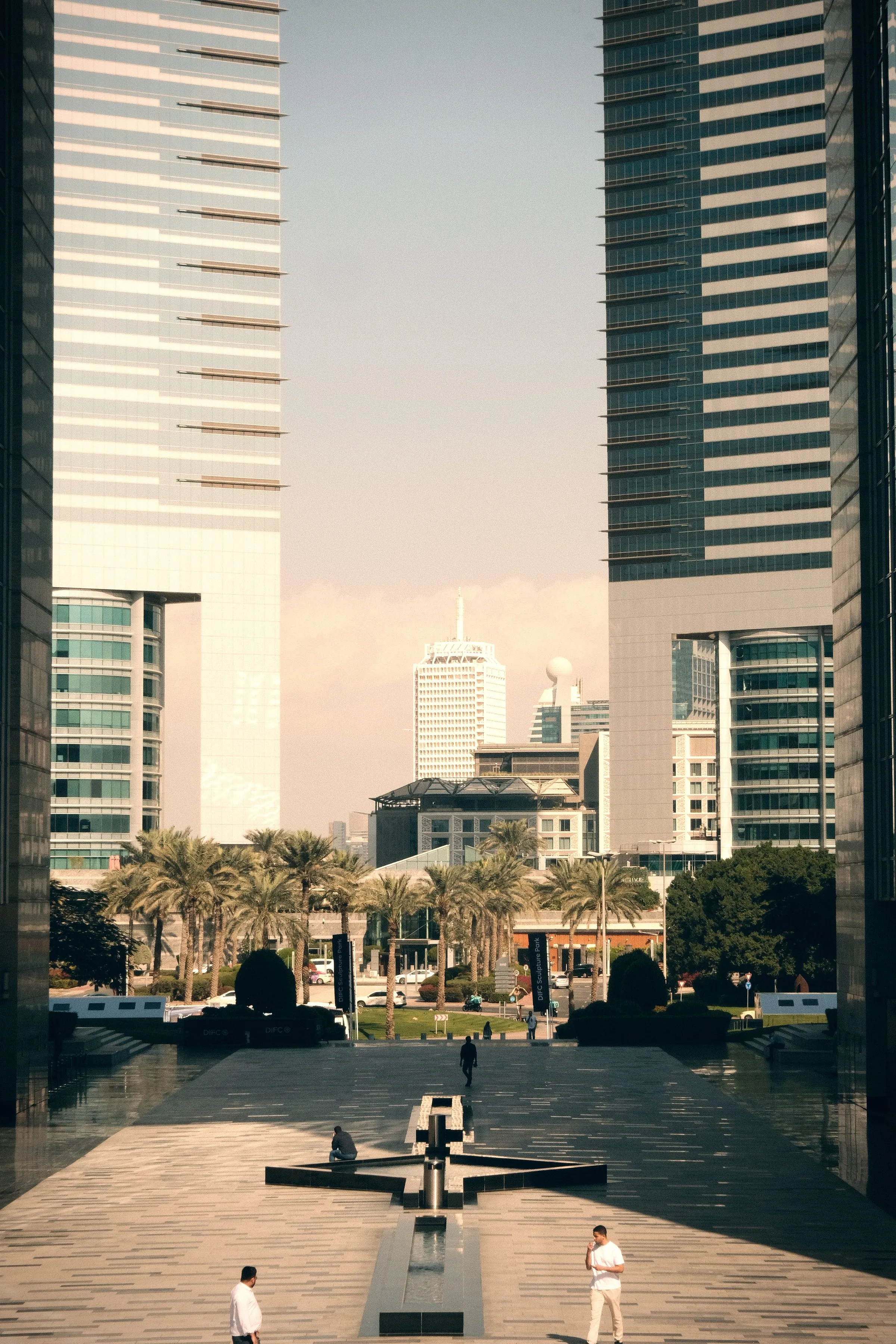
Every published figure on this page, and where it came from
Most “cheapest setup” articles are a list of numbers with no provenance. Here is the whole evidence base for this page in one place, including the zones that publish nothing — because an absence is information too, and it is the gap agents fill with their own numbers.
| Authority | Published figure | Where it is published | Checked |
|---|---|---|---|
| RAKEZ (Ras Al Khaimah) | Starter Package from AED 6,000; all-inclusive setup package AED 14,000 | rakez.com | Aug 2026 |
| UAQ FTZ (Umm Al Quwain) | All-inclusive from AED 2,266 per month | uaqftz.com | Aug 2026 |
| Meydan Free Zone (Dubai) | Starter licence AED 12,500; investor visa from AED 4,000; employee visa from AED 3,500; establishment card from AED 2,000 | meydanfz.ae | Aug 2026 |
| Sharjah Publishing City (SPC) | From AED 5,750 | spcfz.ae | Aug 2026 |
| DMCC (Dubai) | AED 35,484 | dmcc.ae | Aug 2026 |
| JAFZA (Dubai) | Land from AED 400 per square metre | jafza.ae | Aug 2026 |
| IFZA, DAFZA, Dubai South, Hamriyah, SHAMS, Ajman Free Zone, SAIF, KEZAD, Fujairah | Nothing published — quoted on enquiry | — | Aug 2026 |
| Dubai DET, for the e-trader permit and mainland licences | Nothing published as a public tariff | — | Aug 2026 |
Two rows deserve a warning label. SPC’s AED 5,750 is Sharjah Publishing City’s own published figure and belongs to SPC alone — it is routinely misattributed online to SHAMS, which publishes nothing. And the DMCC and JAFZA rows are not low-cost options; they sit in the table to show what a published premium tier actually looks like, so the AED 12,500 Dubai floor has something real to be measured against rather than a vague sense that Dubai is expensive.
The nine-zone “nothing published” row is the single most useful line here. If a quote for IFZA, Hamriyah, SHAMS, Ajman Free Zone, DAFZA, Dubai South, SAIF, KEZAD or Fujairah reaches you as a confident public price, it did not come from the authority. Ask for it in writing on zone letterhead, with the renewal price stated, before it goes into any budget.
The 36-month total, not the year-one sticker
The structural flaw in every cheap-setup comparison is that it compares year one against year one. Promotional entry pricing is a year-one instrument; the business will be renewing for as long as it exists. The frame that actually decides the question is a three-year total, and it changes the ranking more often than not.
| Cost line | Year 1 | Year 2 | Year 3 |
|---|---|---|---|
| Licence | Promotional entry price, where a zone runs one | Rack rate | Rack rate |
| Establishment card | Issued | Renewed | Renewed |
| Residence visas | Issued, with medical and Emirates ID | Usually unchanged for a two-year permit | Renewed, with medical and Emirates ID again |
| Facility | Whatever tier the visa quota demands | Same or higher as headcount grows | Same or higher |
| Attestation for foreign corporate documents | One-off at incorporation | Nil | Nil |
| Corporate tax registration and first return | Registration, plus first return if the period has closed | Return and payment within nine months of period end | Return and payment |
| Bookkeeping and VAT filing | From day one | Full year | Full year |
Two patterns fall out of running that table honestly. The first is that a promotional entry price is worth roughly one third of what it appears to be worth across three years, because it applies once and the rack rate applies twice. The second is that visas dominate. A one-person business adding a single residence visa lands at roughly double the zero-visa sticker in year one on published Meydan add-on rates, and the visa renewal in year three repeats a large part of that.
This is why the honest comparison is not “which zone is cheapest” but “which zone is cheapest for my configuration”. A zero-visa remote consultant and a three-visa trading company will not get the same answer, and any adviser producing one number without asking the visa count has not done the work.
The compliance line no tier escapes
Cheap licences carry full-price obligations. Corporate tax registration is mandatory for every company through EmaraTax — the FTA’s published penalty schedule backs the deadline with AED 10,000 — although the actual liability at startup scale is usually nil: 9% applies only above AED 375,000 of taxable income, and small business relief can zero it below AED 3 million of revenue for eligible residents, for tax periods ending on or before 31 December 2029. VAT registration triggers at AED 375,000 of taxable supplies (voluntary from AED 187,500). Books of account are a Commercial Companies Law requirement from day one, retained five years.
Set out as dates rather than prose, the obligations a AED 6,000 licence carries are identical to the ones a AED 35,484 licence carries. Every entry below is taken from the primary text and checked on 4 August 2026.
| Obligation | The rule | Source |
|---|---|---|
| Corporate tax registration | Failure to submit the registration application within the timeframe the FTA specifies attracts AED 10,000 | Cabinet Decision 75/2023, penalty schedule item 14, added by Cabinet Decision 10/2024 |
| Corporate tax return and payment | Both within nine months from the end of the tax period | Federal Decree-Law 47/2022, Articles 53(1) and 48 |
| Small business relief | Revenue threshold AED 3,000,000 per tax period, available only for tax periods ending on or before 31 December 2029, and lost permanently once revenue has exceeded the threshold in any relevant or previous period | Ministerial Decision 73/2023, as amended by Ministerial Decision 131/2026, Article 2(1), 2(2) and 2(3) |
| Who cannot elect small business relief | A constituent company of a multinational group, and a Qualifying Free Zone Person | Ministerial Decision 73/2023, Article 3 |
| VAT return and payment | Must reach the FTA no later than the 28th day following the end of the tax period | Cabinet Decision 52/2017, VAT Executive Regulation, Article 64(1) and 64(3) |
| Audited financial statements | Required where revenue exceeds AED 50,000,000, and for every Qualifying Free Zone Person regardless of revenue | Ministerial Decision 84/2025, Article 2(1) |
| Accounting records retention | Five years following the tax period they relate to for a taxable person, with four more years added where a dispute or tax audit is live | Cabinet Decision 74/2023, Article 3(1)(a) and 3(2) |
Read the small business relief row against the calendar. Article 2(2) of Ministerial Decision 73/2023, as amended by Ministerial Decision 131/2026, confirms the AED 3,000,000 threshold continues only for tax periods ending on or before 31 December 2029, which means a business setting up cheaply in Dubai today should be modelling a corporate tax charge appearing for the first time in the period after that. Budgeting a cheap licence without budgeting that outflow is exactly the false economy this page is about.
The audited statements row is the one that catches free zone founders. Every Qualifying Free Zone Person must prepare audited financial statements under Ministerial Decision 84/2025 Article 2(1), at any revenue level. A AED 6,000 licence in RAKEZ or a AED 12,500 licence in Meydan therefore carries an audit cost from year one if the company wants the 0% qualifying rate — an ongoing professional fee that no licence sticker anywhere mentions.
The four ways a cheap setup turns expensive
Every expensive outcome we see traced back to a cheap licence has one of four causes, and none of them is the licence price.
Activity wording that excludes your revenue. Free zone entry packages are priced around a narrow activity list, usually service or consulting. If the business actually trades goods, holds inventory, or performs a regulated activity, the entry package either does not permit it or permits it only after an upgrade that costs more than the original licence. The failure surfaces at the first invoice a client’s compliance team questions, or at the bank. Read the permitted activities before the price.
A visa quota that does not fit the plan. Zero-visa packages are genuinely zero-visa. Every residence visa requires an establishment card first, and every tranche of visas requires a facility tier that the entry package does not include. On Meydan’s own published rates that is AED 2,000 for the establishment card, from AED 4,000 for an investor visa and from AED 3,500 for an employee visa, plus the facility upgrade underneath them. A three-person business that budgeted a zero-visa sticker has mis-budgeted by a multiple, not a margin.
Banking that never opens. UAE banks apply substance and address scrutiny that varies by zone and by profile. A northern-emirates licence held by a founder with no UAE residence, no local customers and a flexi-desk address is a harder file than a Dubai licence with a visa and a lease, and the difference is measured in months of trading rather than dirhams of setup. This is the single most common reason a cheap setup is abandoned and redone, and the redo costs the full price of both.
Mainland access bought twice. A free zone entity selling to UAE mainland customers has a structural question to answer — through a distributor, an agent, or a second mainland entity. Where the answer turns out to be a second entity, the business has bought two licences, two sets of renewals and two sets of books to save a few thousand dirhams on the first one. For a business whose customers are UAE consumers and onshore companies, the lean mainland route in tier four is frequently the cheaper structure even though it is never the cheaper sticker.
None of those four is discovered by comparing prices. All four are discovered by describing the operating model first — what you sell, to whom, from where, with how many people — and pricing the structures that actually support it. That is a twenty-minute conversation, and it is the one step the whole low-cost setup market is organised to skip.
None of this costs much to do on time; all of it compounds expensively when discovered late — which is the cleanup work our accounting and bookkeeping and corporate tax teams spend too much time doing for two-year-old “cheap” setups.
How Velmont Crest helps
Disclosure first, because this page names and ranks zones. Velmont Crest is an official channel partner of Meydan Free Zone and RAKEZ, and a referral partner across other UAE zones — both of those names appear above as the published low-cost leaders in their tiers. That relationship is why every figure on this page carries its source and the month it was checked, and why the zones that publish nothing are listed as publishing nothing rather than filled in with an agent’s number. Check the tariffs against the authority’s own site before you commit; the sources are printed here precisely so you can.
What we do not have is a package to sell you at a marked-up bundle price. We configure the routes above against your real visa count, customer map and growth plan, price the 36-month total including renewals and compliance, and flag when a few thousand dirhams saved buys a structure that costs you a client, a bank account or a tax position. Then we run the layer that keeps cheap cheap: registrations on time, books monthly, VAT and corporate tax filed before penalties price themselves in. Get a free quote before you buy the sticker.
Disclaimer: Velmont Crest is a DED-licensed UAE accounting firm providing business setup advisory, accounting and compliance support. We are an official channel partner of Meydan Free Zone and RAKEZ and a referral partner across other UAE free zones. We are not a law firm, a tax agent representing clients before the FTA, or a licensing authority. Zone tariffs change without notice and promotional pricing lapses — every figure here carries its source and the month it was checked, and each should be confirmed with the issuing authority in writing before you budget against it.
References
- RAKEZ — packages and published tariffs
- Meydan Free Zone — published licence and visa pricing
- Umm Al Quwain Free Trade Zone — published packages
- Sharjah Publishing City Free Zone — published packages
- DMCC — published setup costs
- JAFZA — published land and facility rates
- Invest in Dubai — Dubai Department of Economy and Tourism licensing services
- UAE Government Portal — eCommerce licensing across the emirates
- Federal Tax Authority — corporate tax and VAT legislation
Frequently asked questions
- What is the cheapest way to start a business in Dubai?
- For a solo, home-based seller or freelancer who qualifies: the DET e-trader permit — no office, no visa file, legal same-day, and the cheapest legal route by a distance. For a real company with the Dubai postcode: Meydan publishes AED 12,500 for a zero-visa starter licence (meydanfz.ae, checked Aug 2026), and IFZA competes in the same tier but quotes rather than publishes. If 'Dubai' can flex to 'UAE', the northern-emirates zones roughly halve that again — RAKEZ publishes a AED 6,000 starter package (rakez.com, checked Aug 2026).
- Can I really set up a company for under AED 6,000 in the UAE?
- Yes — outside Dubai. RAKEZ publishes a Starter Package at AED 6,000 and an all-inclusive setup package at AED 14,000 (rakez.com, checked Aug 2026). Hamriyah, Ajman Free Zone and SHAMS sit in the same budget bracket but publish no tariff at all, so their figures have to come from the zone in writing. The honest caveats: adding a visa costs more again plus an establishment card, banks scrutinise northern-emirates addresses harder, and renewals price at rack rates once the promotion lapses.
- How much does a low-cost setup really total in year one?
- Take the licence sticker, then add what your configuration genuinely needs: the establishment card and the visa stack if anyone needs residency, facility upgrades if you outgrow the shared desk, attestation for foreign corporate documents, and a bank minimum balance commitment. Meydan is one of the few zones publishing those add-ons — investor visa from AED 4,000, employee visa from AED 3,500, establishment card from AED 2,000 (meydanfz.ae, checked Aug 2026). A budget licence plus one visa is realistically double the sticker in year one — still cheap, just not the sticker.
- Is a cheap free zone licence worse than an expensive one?
- Legally, no — 100% foreign ownership, profit repatriation and the corporate tax rules are identical everywhere; QFZP treatment depends on your substance and activities, not the zone's price tier. The differences are practical: address perception with banks and clients, facility depth, service responsiveness and visa quota flexibility. For many lean businesses those differences are worth zero; for client-facing brands they're worth the Dubai premium.
- Can I run a business in Dubai on a northern-emirates licence?
- You can serve clients anywhere from a free zone licence in the ways free zone entities lawfully can — remote services, exports, B2B arrangements through proper channels — but the licence's home determines your visa emirate processing, your registered address and where physical operations sit. Plenty of consultants hold an Ajman or RAKEZ licence and meet Dubai clients daily. Goods trading into the mainland routes through customs and distributors regardless of which zone you chose.
- What ongoing costs should a budget setup expect?
- Licence renewal (rack rate, not the promo), visa renewals every two years for most free zone permits, facility rent if any, and the compliance layer: corporate tax registration is mandatory from day one with an AED 10,000 penalty for lateness per the FTA schedule, VAT registration at AED 375,000 of taxable supplies, and books of account kept at least five years by law. Budget for bookkeeping the way you budget for rent — the cleanup alternative costs multiples.
- Are setup agents charging a large premium for something I can do myself?
- Often, yes — the portals are genuinely self-service for clean, unregulated cases, and every figure in this guide comes from the authority's own site rather than an agent's price list. Agents earn their fee where cases aren't clean: regulated activities, corporate shareholders with attestation chains, banking-difficult profiles, or multi-entity structures. Pay for judgment on the hard parts, not for someone to type your passport number into a form.
- How much does a trade license cost in Dubai?
- There is no single Dubai trade licence cost, because the figure depends on the route. A Dubai e-trader permit sits at the bottom of the range and is limited to home-based online selling by residents. Budget Dubai free zones such as Meydan and IFZA publish entry packages well above that for a zero-visa service licence. A mainland DET licence adds premises and name-approval costs on top, so it usually lands higher again, and northern-emirates free zones undercut all of the Dubai options. Every published figure is the sticker, not the total — visa costs, establishment card, medicals, Emirates ID and renewals sit outside it. Confirm the current fee with the issuing authority before you budget.
Filed under: Low Cost Setup, Business Setup, Dubai, Budget, Free Zone, E-Trader
Published · Updated